Prairie Dock
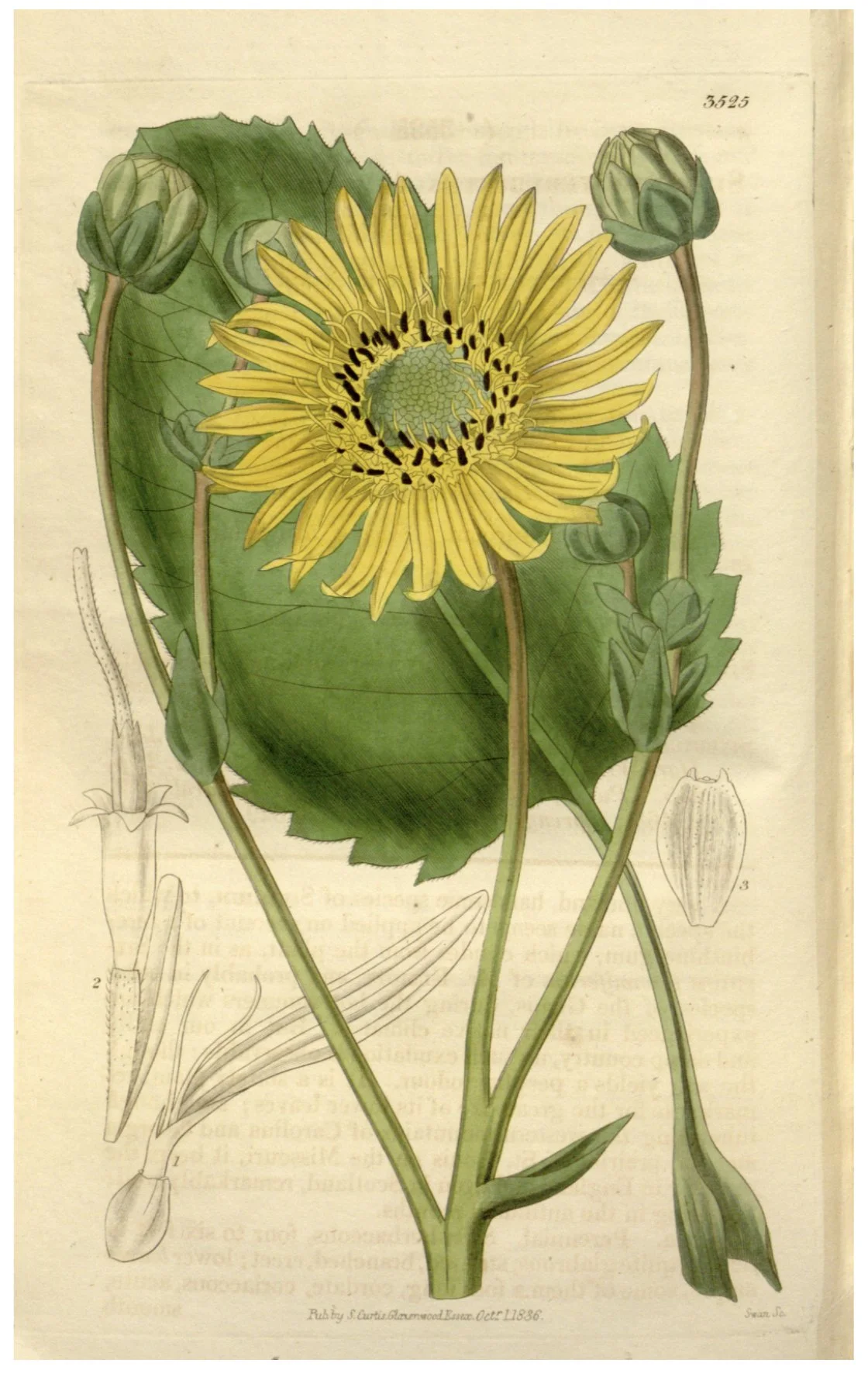
Prairie Dock
PRAIRIE DOCK SEEDS
Silphium terebinthinaceum
Another architectural specimen for naturalistic gardens: in early August bare stalks up to 10' erupt from a basal rosette of huge leaves that no doubt evolved during the Pleistocene. The yellow daisy flowers attract native bees and hummingbirds and the seeds are beloved by goldfinches. Native to the tallgrass prairies of North America and named for the turpentine-scented resin exuded from both tops and bottoms.
This species develops an incredibly long taproot, allowing it to thrive in poor dry soils and survive long periods of drought. Not ideal for dense clay (try Cup Plant instead). Where soils are shallow stature will be shorter but the foliage still imposing. Prairie Dock is difficult to situate in an ornamental perennial border, where the foliage would be best appreciated up front, but the flower stalks seemingly out of place. It is in some ways similar to Crambe cordifolia, and though I have never grown them together it occurs to me that it might work. Probably easiest in meadow and prairie landscapes, where its unique qualities can shine. Though commonly considered browse for bison, these plants are less likely to recover quickly from grazing animals than other species in the genus.
Seeds require stratification to germinate. They may be sown where they are to grow in late autumn through winter, or tucked just beneath the surface of moist soil in deep pots kept in a sheltered location, like a cold barn or screened porch, to overwinter. Seeds begin to germinate in early spring and seedlings started in pots should be plucked out as soon as possible and transplanted into the garden to avoid impeding the growth of the taproot. Growth in the first year is a rosette of foliage, and occasionally it will also bloom, but more often not until the second year.
Packet contains at least 30 seeds.
Thumbnail photo shamelessly stolen from the Denver Botanic Garden where it grew amongst Chihuly.