Cup Plant
Cup Plant
CUP PLANT SEEDS
Silphium perfoliatum
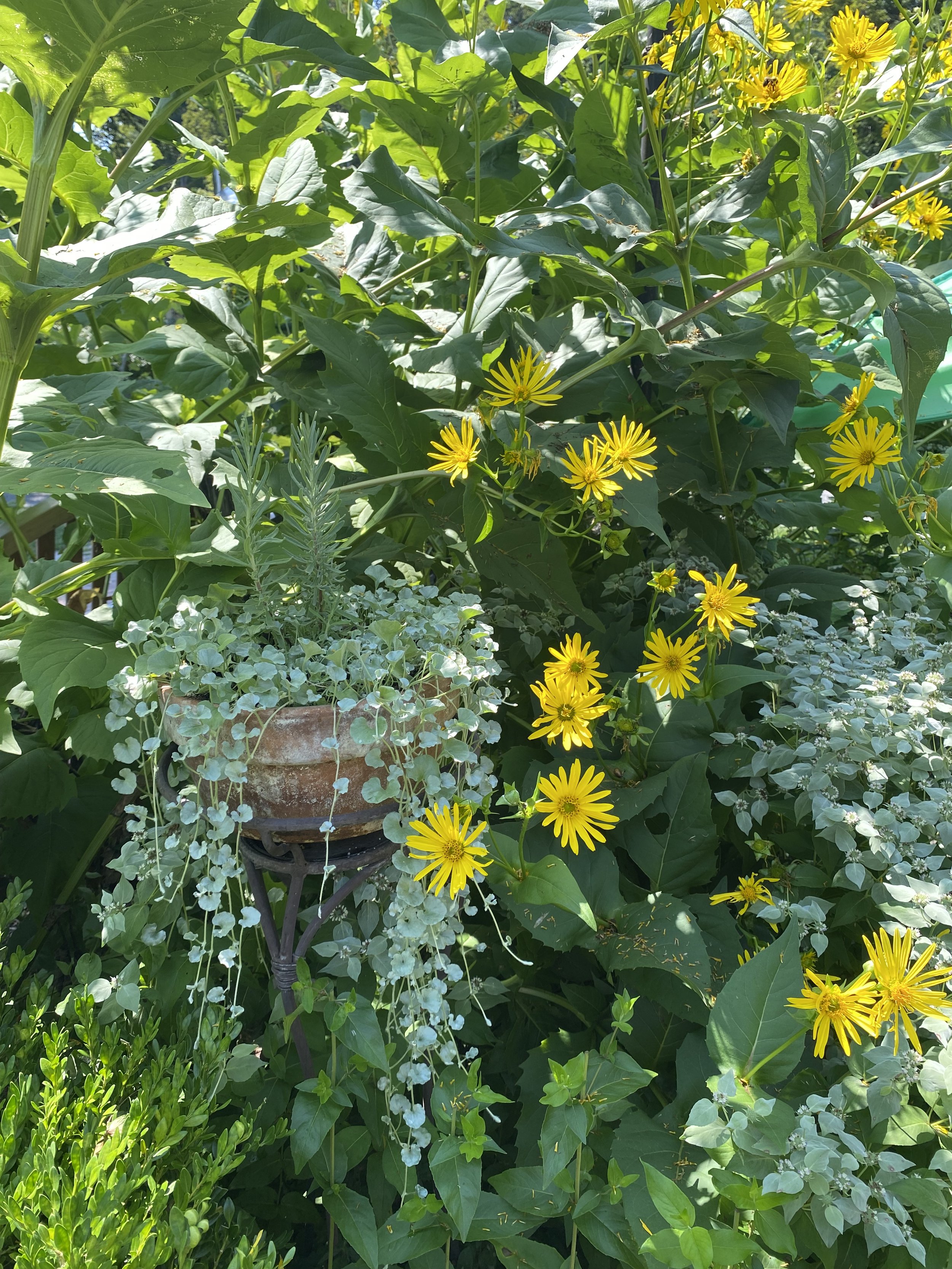
An impressive architectural North American native that is particularly vigorous in the Northeast, to the degree that it is considered a “noxious native" in parts of New York and Massachusetts. The plants can grow to 10' tall and spread indefinitely by rhizomes. Tolerant of diverse soils, even dense clay, in which its considerable annual biomass and extensive root system effectively remediates compaction and hypoxia. The species epithet describes the leaves in relation to the stem, which create a “cup" for collecting moisture, including morning dew, providing small winged and terrestrial wildlife with regular water. The flowers are beloved by native bees. The foliage is nutritious fodder for pastured livestock and is cultivated for this purpose in Eurasia. It is overall among the most valuable species in diversified regenerative landscapes as well as a beautiful specimen in large gardens, or even small gardens with careful stewards, as evidenced at the Berkshire Botanical Garden.
Extensively utilized for medicinal and ritual purposes by several Native American tribes, although the most interesting to me of all the uses documented is the administration of root soot to protect children from spirits of the dead. And this is not the only Silphium species employed in witchcraft per available literature. The roots of these plants in general appear to have protective effects, both internally and externally, and a decoction of the root was even given to pregnant women to relieve nausea and to prevent premature birth (although we do not necessarily recommend using this species for these purposes).
These seeds require stratification to germinate. They may be sown where they are to grow in late autumn through winter, or tucked just beneath the surface of moist soil in pots overwintered in a sheltered location, like a cold barn or screened porch. Seeds begin to germinate in early spring, and seedlings started in pots should be plucked out as soon as possible and transplanted into the garden or field to allow the extensive root system plenty of space to spread out. Growth in the first year is a low rosette of foliage. In the second year plants send up a flowering stalk to 6' or so. Over time these plants will spread to create a broad stand of foliage that produces several flowering stems ranging from 4’-10'. A spectacular display. Take care where you plant these beasts as the roots will sneak beneath fences and your neighbors may never forgive you.
Packet contains at least 50 seeds.
Pictured is a mature but relatively confined stand of Cup Plant at the Berkshire Botanical Garden, alongside another beautiful and useful native, Mountain Mint.