Rattlesnake Master
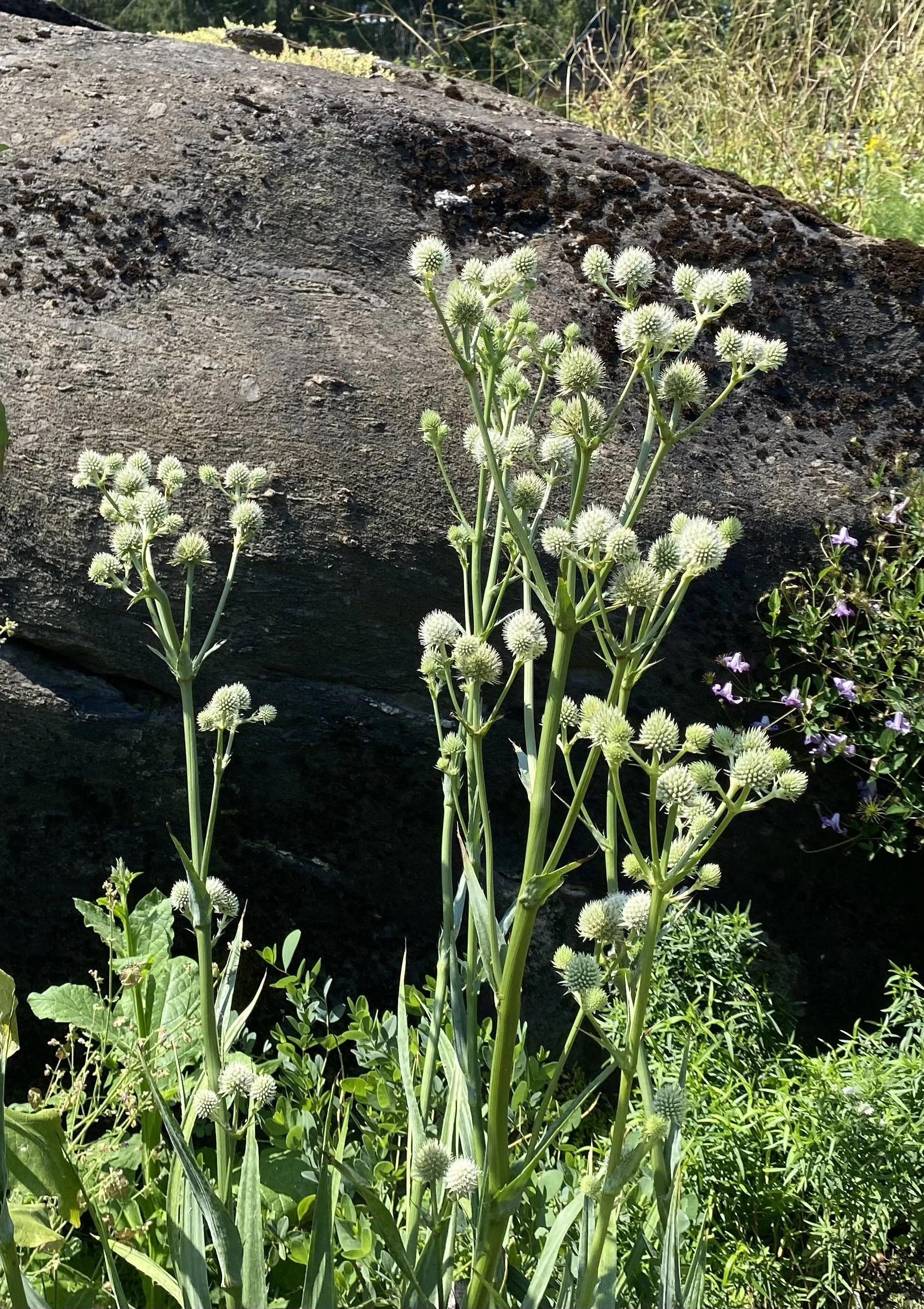
Rattlesnake Master
RATTLESNAKE MASTER SEEDS
Eryngium yuccifolium
One of our most unusual native medicinals, and an extraordinarily ornamental hardy perennial, this umbellifer is so named for its use as an effective antidote for rattlesnake venom by virtually every major Eastern tribe. Its range encompasses almost the entirety of the continent east of the Rocky Mountains, from the pine barrens of New Jersey to the Missouri River and south into Texas and Florida. It is adaptable to diverse soils and climates and hardy to zone 3.
The basal foliage of this plant is substantial and looks very much like a Yucca. These leaves were once valued for their strong fibers, and the resultant textiles are some of the oldest known in North America, including 8000 year old shoes found in Missouri. The ancient relationship between humans and this species could very well be the reason its native range is so broad, for after so many thousands of years how could anyone know the difference between the hand of man and nature herself.
The flowers of this species are pale globes that at first blush appear to be those of thistles, but they are technically irregular umbels. They are persistent and make fine floral material. The fairly bare flowering stems can grow to 5’ where they are happy, and even if their growth is stunted by shallow soils the contrast these plants create is striking. Tolerates our compacted clay and competes reasonably well with milkweed. In rich loose moist soils the stems will sometimes flop and should have some support. Best in the dry neglected areas of your garden.
Medicinal use of this plant is storied and significant. Most commonly the roots are dug and dried in autumn and preparations of these dried roots are employed as an antidote for envenomation both inside and out. It should be noted that studies indicate the efficacy of this species to be specific to the proteolytic venom of North American snakes like copperheads, cottonmouths, and of course rattlesnakes. This species will have no effect on neurotoxic venom.
These seeds require stratification to germinate and the germination rate is not great. Sow generously outdoors in autumn or into a deep pot of moist soil kept outdoors in a sheltered location over the winter. Seeds will begin to germinate in spring and should be transplanted promptly into the garden or into individual deep pots of loose soil. Water frequently until established and then only occasionally. Transplant potted plants in autumn or overwinter and plant in early spring of the second year. Best in full sun lest flowering stems flop.
Packet contains around 300 seeds.