Red Welsh Onions
Red Welsh Onions
RED WELSH ONION SEEDS
Allium fistulosum
This “Welsh" onion isn't Welsh at all, but Asian in origin. In fact, it is one of the most ubiquitous of vegetables in China. Per William Woys Weaver: “This variety was called Welsh onion because when the seed was sent to England in 1562, it came from a Swiss botanist who referred to it as Welsch, which means foreign. Another layer of confusion was added to this because the Welsh onion became the poor man’s leek, and leeks, of course, have been long associated with Wales."
Indeed, true leeks (Allium ampeloprasum) may be Welsh. But “Welsh" onions, Allium fistulosum, are Siberian. They are also likely to have been the “leek” grown by the Norse. These onions resemble tall sturdy scallions, are extraordinarily hardy, and will multiply with delightful abandon in most garden soils. If allowed they will propagate themselves into large colonies in just a few seasons.
Welsh Onions can be harvested year round, even in winter. They can be prepared like leeks or eaten in salads like spring onions. This red variety is striking in appearance and has a strong flavor that holds up well to cooking. Hollow stems mimic the effect of green onions in soups, but with a far more assertive flavor. Perfect for winter pho and blue cheese dip.
In cold winter climates, consider a position on the sunny south side of a structure, against a stone foundation, wall or chimney, in soil amended with lots of compost and sand. Even through the coldest winter months these onions will be easily harvested for soups and salads, and braising like leeks with lots of cream, wine and cheese.
Culture is similar to annual onions: in late winter, sow seeds into moist soil, covering with 1/8" of additional soil, pressing lightly to keep seeds snug, and mist generously. Cover with plastic to maintain moisture. Kept warm (65°F) and moist in bright light seeds should germinate in a week or two. Remove plastic once most seeds have germinated. Transplant seedlings to individual cells to grow on in bright light until transplanting outdoors in well amended soil with excellent drainage. Plants withstand frost and seedlings are best planted outdoors as soon as soil can be worked. Older seeds sometimes benefit from some cold to break dormancy and can be sown directly into the garden in very early spring. If your seeds do not germinate readily indoors, pop the pot into the refrigerator or outdoors in late winter for a few weeks before returning to bright light at room temperature. Do not allow the soil to dry out at any point and check for germination frequently.
Once established these plants are virtually indestructable and can be grown without protection from animals and cold in all but the absolute harshest climates. In loose soils the plants will multiply to form large clumps, from which both large and small onions may be harvested (but be sure to leave a few in the ground to carry on multiplying!). Flowering in the second and subsequent years is normal and doesn't seem to diminish the health of the plants. Will self-sow politely. Will also easily cross with other A. fistulosum varieties that may be blooming in your garden, unlikely though that may be.
Packet contains at least 100 seeds.
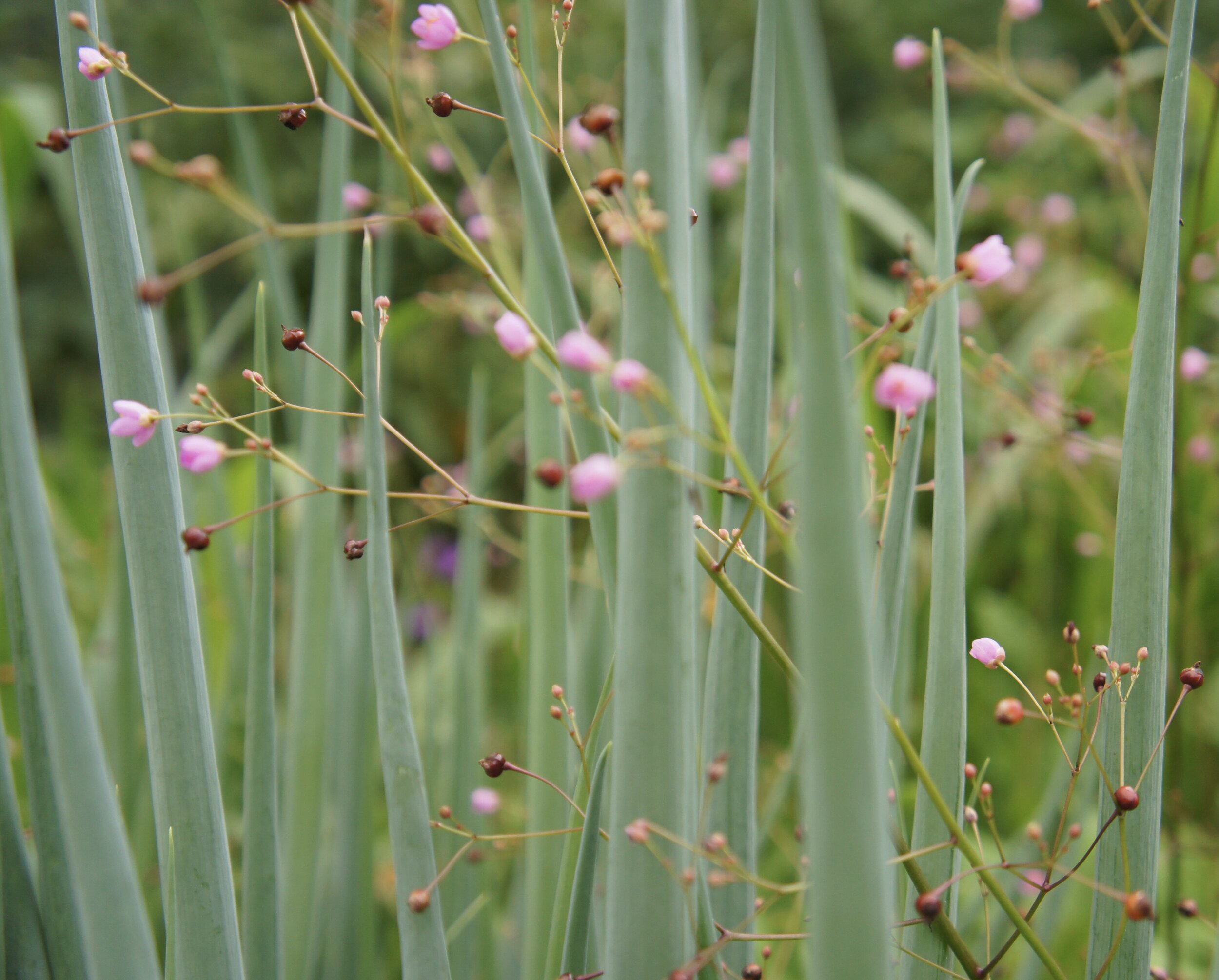
Pictured are the tall hollow stems of first year Red Welsh Onions in our garden with delicate Jewels of Opar flowers.