Crowberry
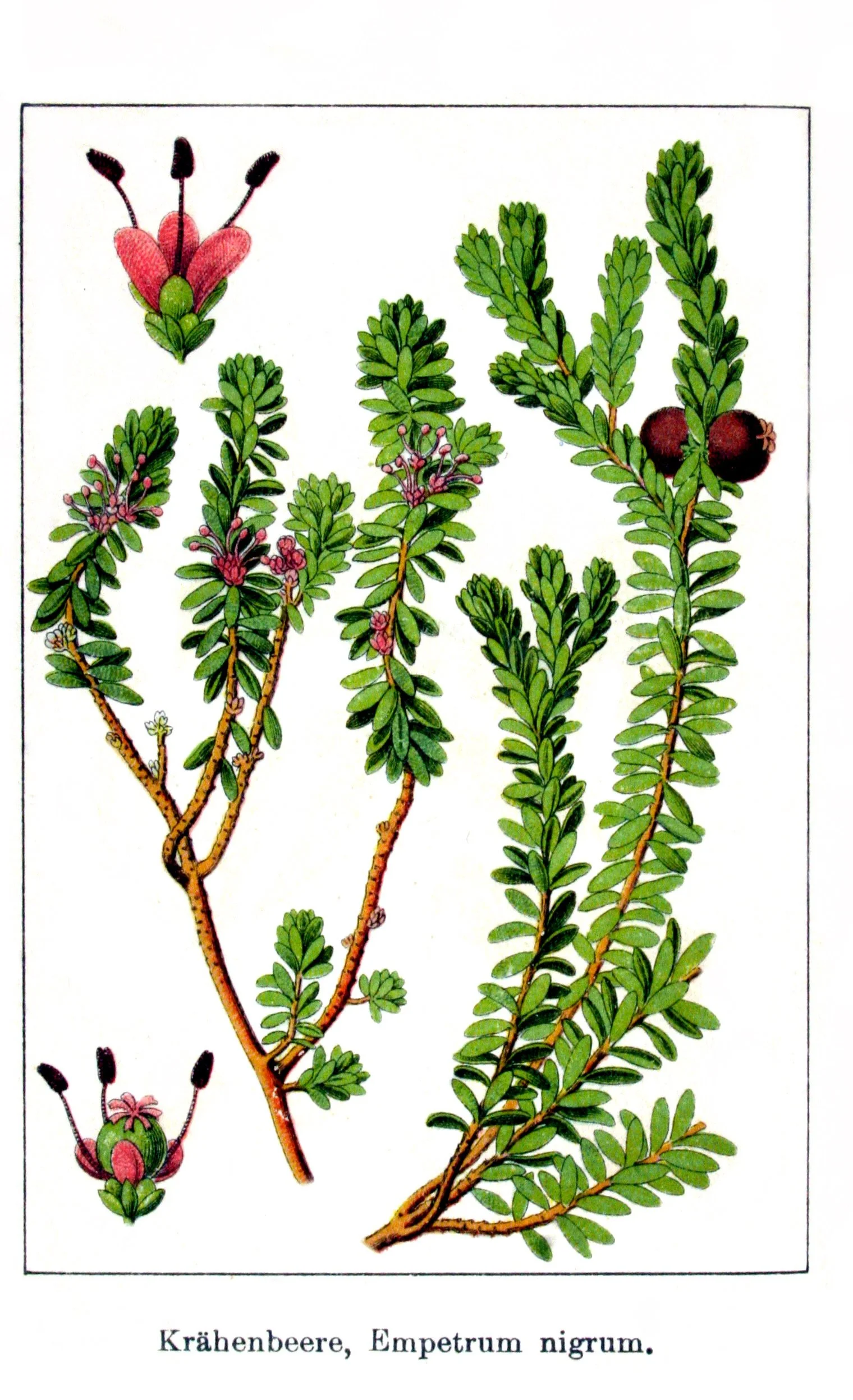
Crowberry
CROWBERRY SEEDS
Empetrum nigrum
Beautiful stoloniferous groundcover whose ripe edible fruits persist through winter. Circumboreal distribution. Common ethnobotanical among diverse northern peoples from Alaska to Scandinavia to Siberia. Our trips to Iceland made us aware of the myriad uses of this species, notably in the delicious alcoholic beverages sold in the Duty Free at Keflavik.
This species can be grown with reasonable success in the poor acidic soils and seasonal wetlands of the Northeast, having cultural requirements similar to our native wild blueberries. Tolerant of shallow soils and a valiant competitor for limited resources thanks to its potent allelopathic qualities. Dioecious, this species is best grown from seed initially, despite being easily propagated via stem cuttings. Grow as many plants as possible to increase the likelihood of fruit production.
Seeds are challenging to germinate and require months-long warm-cold-cool stratification. Start indoors. Tuck seeds just beneath the surface of moist soil, pressing to keep seed snug, and mist generously. Cover with plastic to maintain moisture. Keep pot indoors at room temperature for several weeks at least and up to two months, checking frequently that soil has not dried out completely. Then place pot in a sheltered location (out of direct sunlight) outdoors to overwinter, or into the refrigerator for at least two months before placing in a sheltered location outdoors in late winter. Outdoors is at this juncture is imperative, as the seeds will not germinate unless exposed to the fluctuating temperatures of late winter and early spring, i.e. several freeze and thaw cycles. Attempting to simulate these conditions indoors has not been successful for us. Even after some seeds have germinated in the spring, pots should be kept, watered periodically, through summer and the next winter and spring, and on and on, for as many years as you can possibly tolerate. More seeds will inevitably germinate this way. Patience will be rewarded.
Seedlings are slow to grow and have shallow roots, so water them frequently and fertilize regularly with dilute seaweed extractives. In damp climates they can take full sun but in hot sunny summers they will prefer some dappled shade. These plants will not tolerate basic soils. Gardeners south of the 40th parallel will have very little luck cultivating these plants at all, save for some alpine regions. Even successfully established plants may take a few years to produce much fruit. Again, patience.
If you choose to purchase these plants from a nursery always insist upon both male and female plants!
Packet contains at least 50 seeds.